Periodontal Health and Dementia Risk
Emerging research continues to investigate the relationship between oral health and cognitive health in later life. In particular, periodontal disease—an inflammatory condition affecting the tissues supporting the teeth—has been associated in several studies with an increased risk of cognitive decline and dementia.
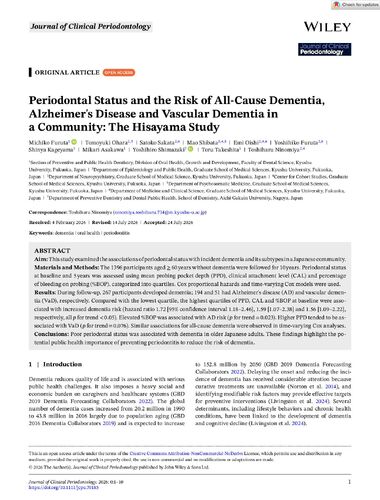
The paper presented below, from the Hisayama Study, examines the association between periodontal status and the subsequent development of dementia, Alzheimer’s disease and vascular dementia in a community-based population. The researchers followed 1,396 adults aged 60 years and older who were free of dementia at the beginning of the study for approximately 10 years.
The study found that measures of periodontal disease, including deeper periodontal pockets, greater clinical attachment loss and increased bleeding on probing, were associated with a higher risk of developing dementia during the follow-up period. The findings add to a growing body of research examining possible links between chronic periodontal inflammation, oral bacteria and neurological health.
Importantly, this was an observational study. Its findings demonstrate an association between periodontal status and dementia risk, but they do not establish that periodontal disease causes dementia. Further research, including studies designed to investigate causation and potential biological mechanisms, is required.
We are making the full paper available here as part of our Literature section to provide access to the original scientific research behind recent reporting on the relationship between periodontal health and dementia.
Reference:
Furuta M, et al. Periodontal Status and the Risk of All-Cause Dementia, Alzheimer’s Disease and Vascular Dementia in a Community: The Hisayama Study. Journal of Clinical Periodontology. 2026. DOI: 10.1111/jcpe.70185.
Article published on The Indepent UK website: The oral condition that could increase dementia risk by over 50 per cent | The Independent